
Our Blog
Custom vs. Template Websites: Which is the Real SEO Winner for Your Business?
Published By Fisher Media at 29-11-2025
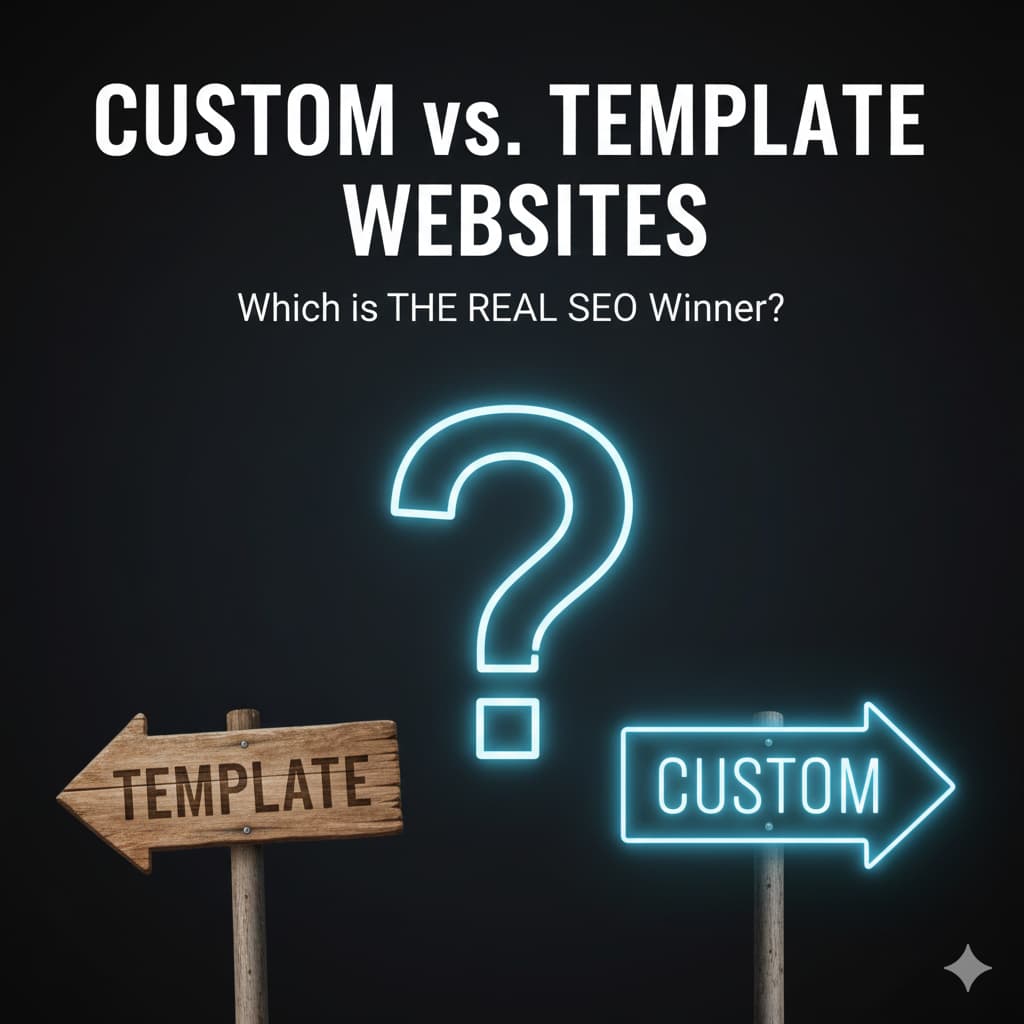
In the digital age, a website isn't just an online brochure; it's your most powerful marketing asset. When embarking on a new website project, one of the first and most critical decisions you'll face is whether to opt for a custom-built site or a template-based solution.
Often, businesses are swayed by the initial lower cost and quicker launch time of templates. However, what looks like a saving upfront can quickly become a significant liability when it comes to long-term performance, particularly in the realm of Search Engine Optimization (SEO). So, which is the real SEO winner for your business? Let's break it down.
The Cost vs. Value Myth: Looking Beyond the Sticker Price
It’s true that template websites (think WordPress themes, Squarespace, Wix) often have a lower initial price tag and can be launched faster. They offer pre-designed layouts, drag-and-drop builders, and a seemingly simple path to getting online.
But here’s the catch: this perceived "saving" often comes at the expense of crucial SEO foundations, scalability, and unique brand representation. A custom website, while requiring a larger upfront investment, is built from the ground up with your specific business goals and SEO strategy in mind, leading to significantly higher long-term value and ROI.
Deep Dive into SEO Performance: Where the Differences Emerge
The core of the debate lies in how each approach impacts your ability to rank high on search engines.
-
Page Speed & Core Web Vitals: Google heavily penalizes slow websites.
- Template Websites: Often come bloated with unnecessary code, plugins, and features designed for mass appeal, not optimization. This "feature creep" can dramatically slow down loading times, hurting your Core Web Vitals scores and user experience.
- Custom Websites: Are built with lean, clean code, incorporating only the functionalities you need. This allows for superior optimization for speed, leading to better user experiences and higher search rankings.
-
Clean Code & Crawlability: Search engine spiders "crawl" your site's code to understand its content and structure.
- Template Websites: Can have complex, disorganized, or redundant code structures that make it harder for crawlers to efficiently index your site. This can lead to missed content and lower rankings.
- Custom Websites: Are developed with SEO best practices in mind, featuring semantic HTML, logical site architecture, and clean code that Google's crawlers can easily understand and interpret. This ensures better indexing and a clearer understanding of your site's relevance.
-
Structured Data Implementation: Structured data (Schema markup) helps search engines understand the context of your content, leading to rich snippets in search results.
- Template Websites: Often offer limited or generic structured data options, making it difficult to implement highly specific or advanced schema that gives you an edge.
- Custom Websites: Allow for precise implementation of any structured data markup relevant to your business (e.g., local business schema, product schema, event schema), providing search engines with richer context and improving your chances for prominent search visibility.
User Experience & Conversions (UX/CRO): Designed for Your Customer
SEO isn't just about getting traffic; it's about getting the right traffic that converts. User experience plays a huge role in this.
- Template Websites: Are designed for a broad audience. While they might look good, they often fall short in providing a truly tailored user journey that guides your specific target audience towards conversion. This can lead to higher bounce rates and lower conversion rates, signaling to Google that your site might not be as relevant or useful.
- Custom Websites: Are meticulously designed around your target audience's needs, behaviors, and your unique sales funnel. This hyper-focused approach results in intuitive navigation, clear calls-to-action, and a seamless experience that encourages visitors to stay longer and convert more often – positive signals for both users and search engines.
Scalability & Integrations: Growing Without Limits
As your business grows, your website needs to evolve.
- Template Websites: Can be rigid. Adding new, complex functionalities or integrating with specific third-party tools (like advanced CRMs, custom analytics, or unique booking systems) can be difficult, expensive, or even impossible without breaking the template. This can stifle growth and force expensive re-platforming down the line.
- Custom Websites: Are built for flexibility. They can be easily scaled, modified, and integrated with any system your business requires, ensuring your website remains a robust, future-proof asset that supports your evolving business needs.
In summary: If you need a very basic online presence with minimal SEO goals, a template might suffice. However, if your website is a critical component of your business strategy, if you rely on organic search for leads and sales, and if you plan for future growth, a custom website is the undisputed SEO winner. It's an investment in a robust, high-performing asset that will serve your business for years to come.
